
Abstract
Anew Labs offers a suite of AI models for biomolecular structure prediction and design — AnewFold, Protenix, and SeedFold. Each addresses a distinct piece of the puzzle: AnewFold pushes prediction accuracy to the frontier, Protenix is the fully open-source reproduction and extension of AlphaFold3, and SeedFold reveals how folding models scale. Together they form a complete path from understanding molecular structures to designing new drug candidates.
AnewFold
- What it is: Anew Labs’ in-house all-atom foundation model for biomolecular complexes, built for the hardest interaction-prediction scenarios.
- Stronger prediction: Delivers the best accuracy on difficult tasks such as antibody–antigen and protein–ligand prediction, with the clearest advantage on novel targets that lack close structural analogs — far beyond AlphaFold3 and other open models.
- Unique pocket discovery: Goes beyond structure to locate binding pockets, including allosteric and cryptic sites invisible in conventional structures.
- Closed-loop design: Works with AIFEP to connect structure prediction with binding-affinity estimation for end-to-end drug design. A technical report will follow.
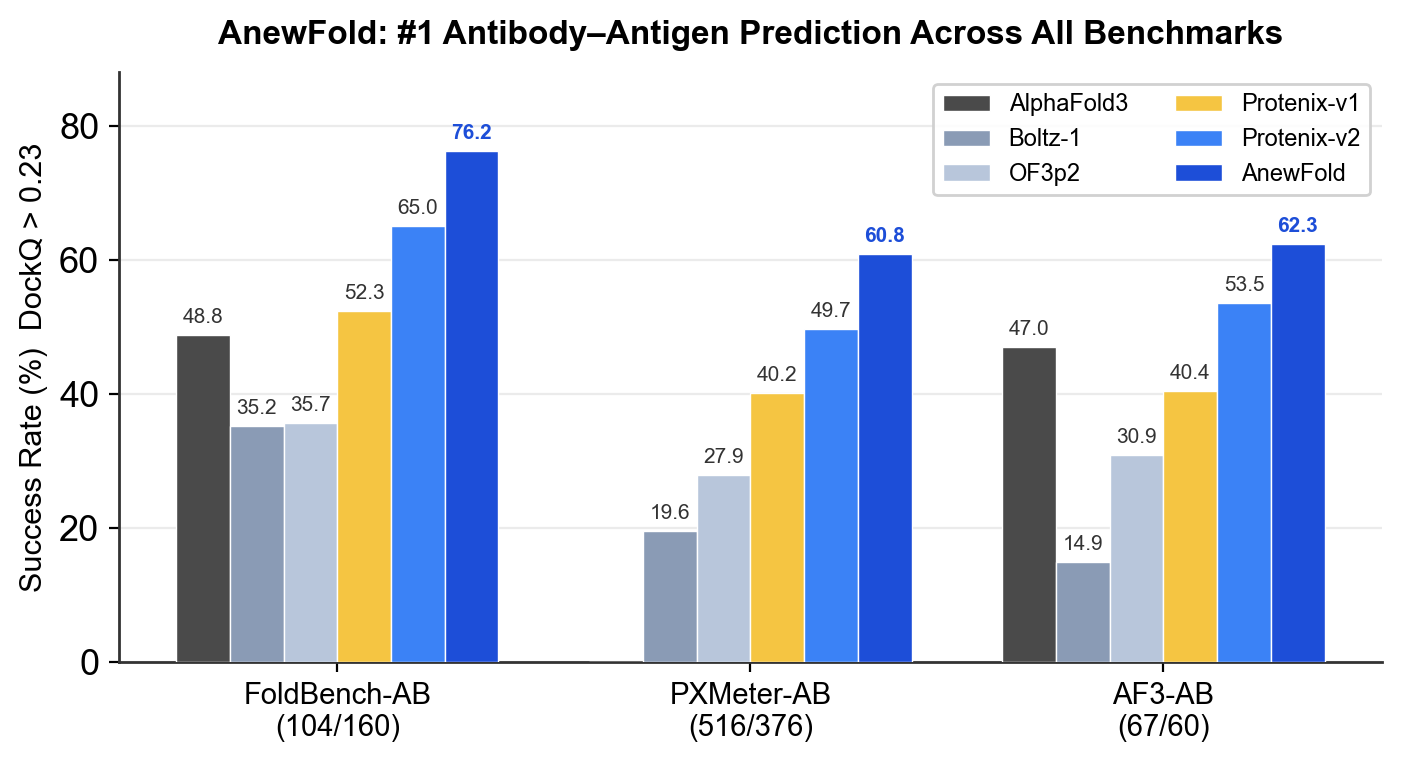
Figure 1. AnewFold ranks #1 for antibody–antigen prediction across the FoldBench-AB, PXMeter-AB and AF3-AB benchmarks (success rate, DockQ > 0.23).
Protenix
- What it is: The first model to comprehensively reproduce AlphaFold3 and release everything to the community.
- Fully open source: Model weights, inference code, and training code are all released under a permissive license (Apache 2.0), removing the access barrier around AlphaFold3 and correcting issues in its original implementation.
- Ready to use: Ships with a public web server for both structure prediction and binder design, with no local setup required. Protenix-v2 further strengthens prediction for antibodies and other challenging complexes.
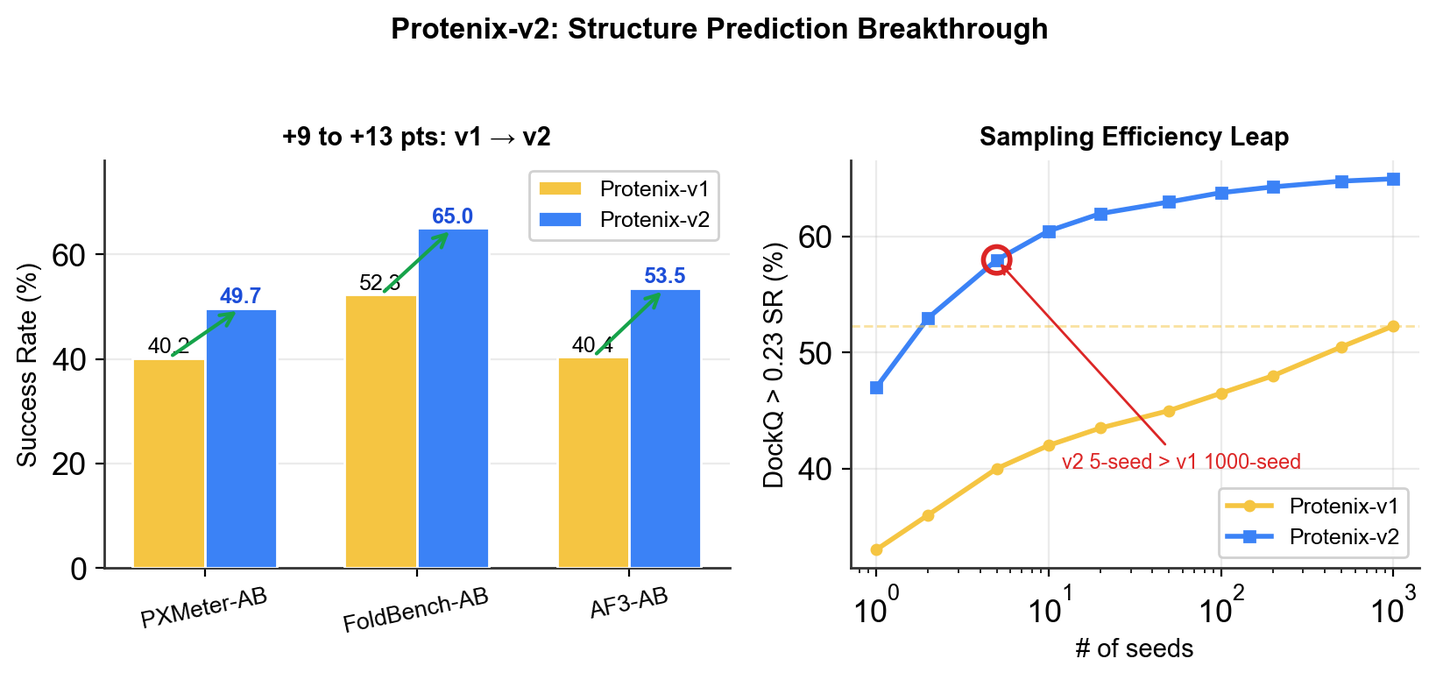
Figure 2. Protenix reproduces AlphaFold3 in the open and keeps improving.
SeedFold
- What it is: A next-generation folding model that systematically answers how structure-prediction models should scale up.
- Width over depth: Shows that widening the Pairformer is the effective scaling path, rather than simply stacking more layers.
- Efficient attention: Introduces linear triangular attention that cuts complexity from cubic to quadratic, making larger models practical.
- Data scaling via distillation: Builds a large-scale distilled training set and surpasses AlphaFold3 on most FoldBench tasks.
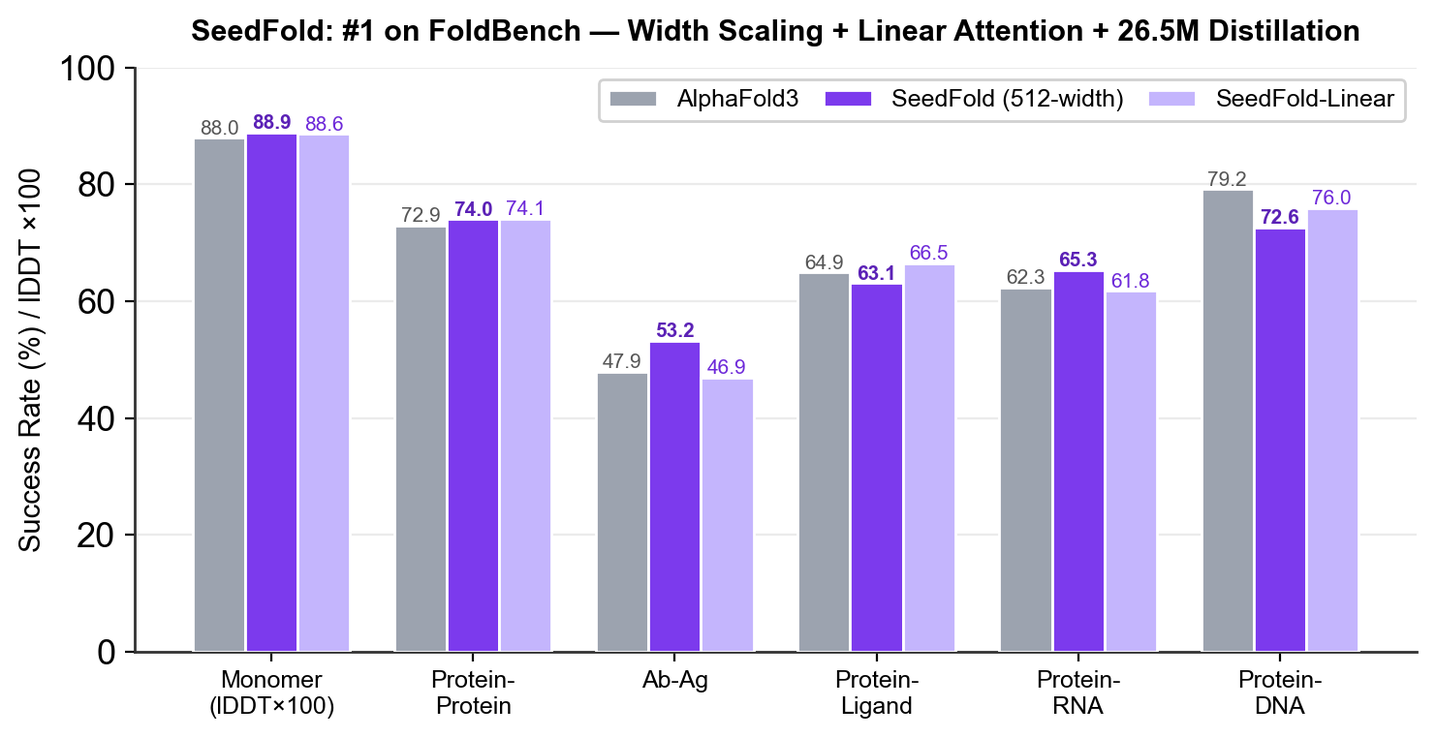
Figure 3. SeedFold demonstrates the scaling laws of biomolecular folding and tops FoldBench.