
Highlight:
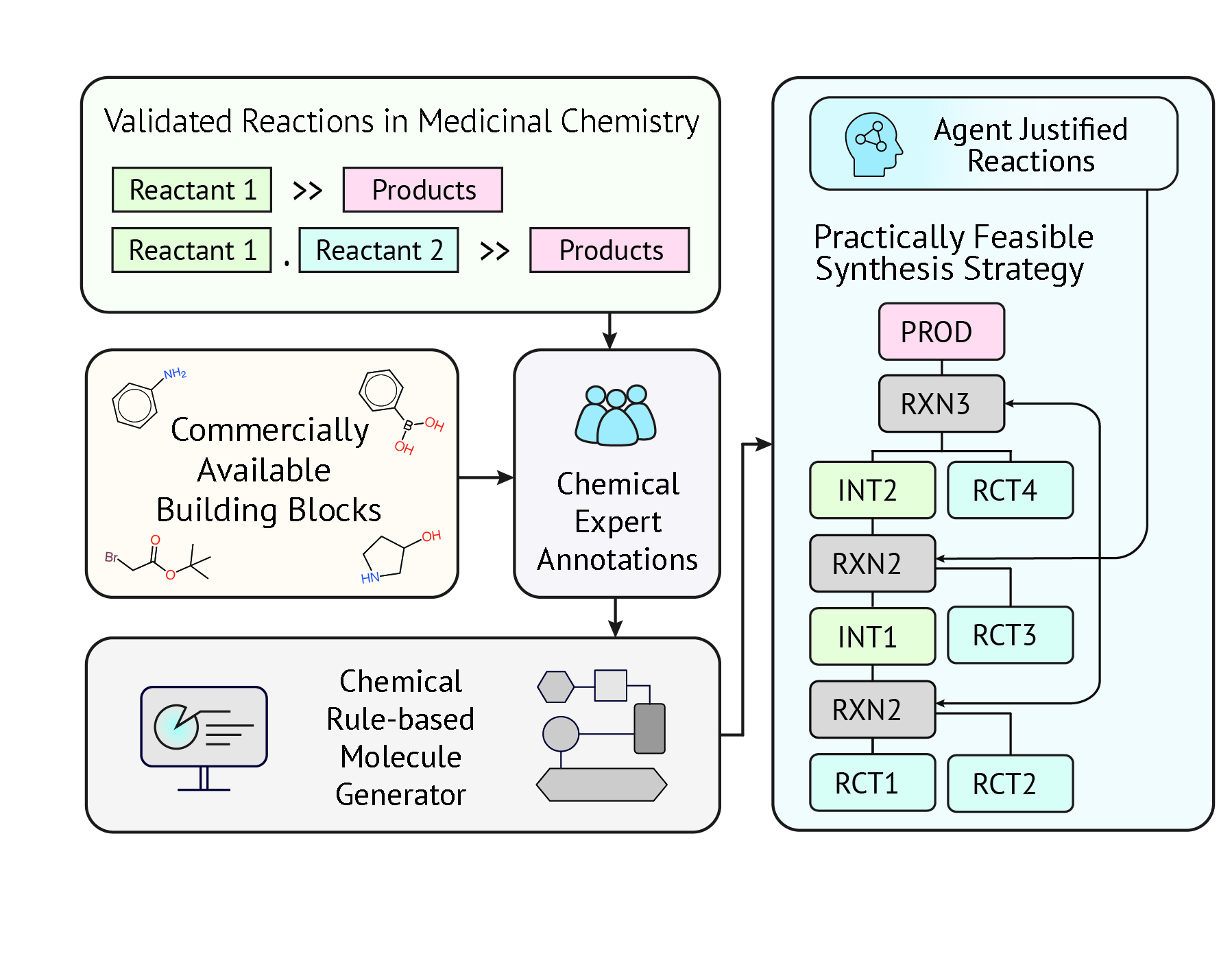
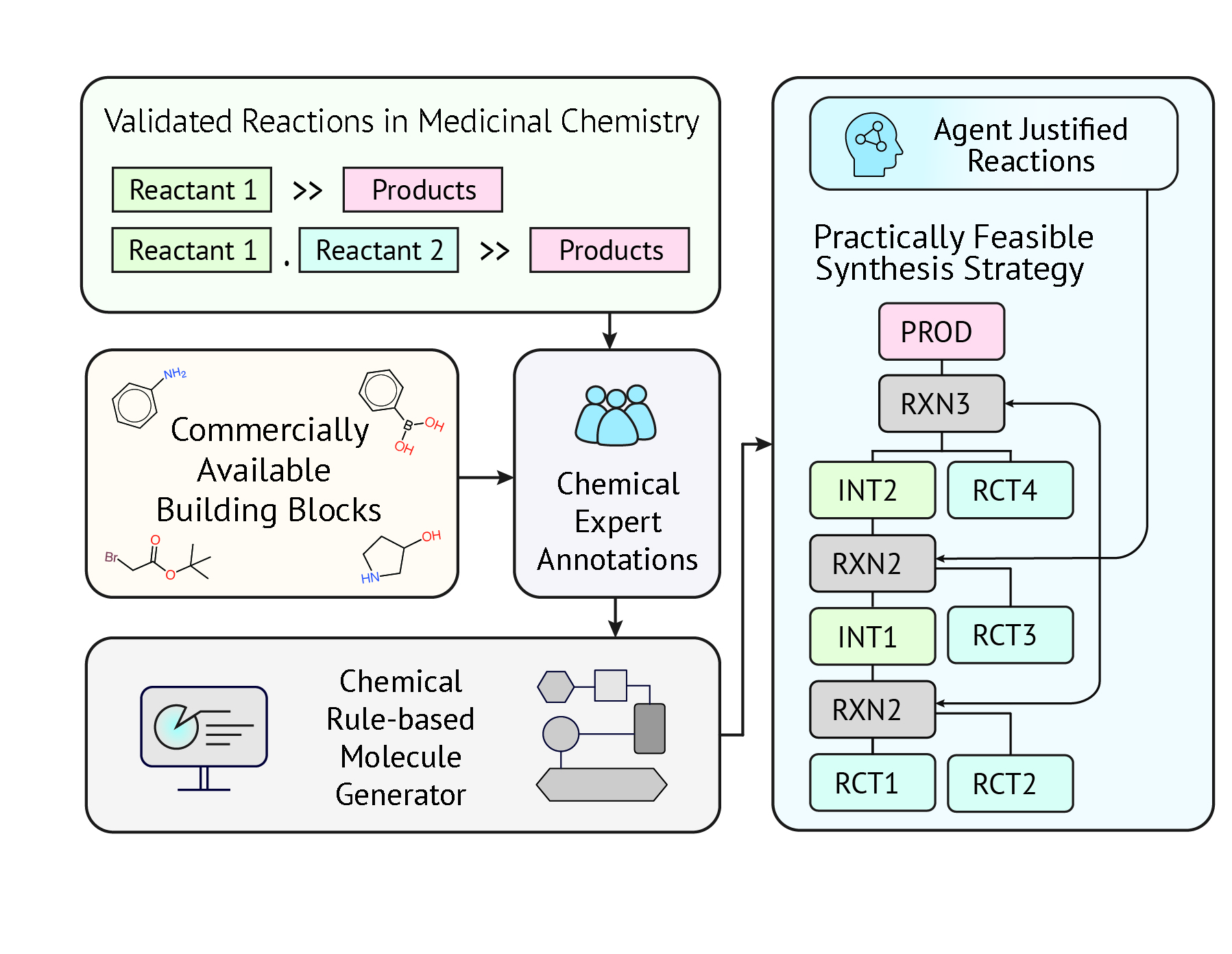
FeaSynth integrates an Expert Encoding Scheme with 145 annotated reaction templates to resolve critical chemical conflicts and significantly outperform SOTA baselines in practical synthesizability. We also establishes a standardized Reaction Pathway Feasibility (RPF) Score to rigorously quantify route viability and ensure only the most robust, experimentally valid pathways are selected.
The domain of de novo molecular generation is advancing at a breakneck pace, yet a formidable barrier remains: the challenge of practical synthesizability. While algorithms can dream up molecules in milliseconds, validating them in the wet lab remains a critical bottleneck. To bridge this gap, the industry has witnessed a surge in reaction template-based approaches. These methods attempt to simulate medicinal chemistry logic by training models to plan routes using predefined rules and commercially available building blocks.
However, at Anew Therapeutic, we identified a fundamental disconnect in these prevailing paradigms. Our retrospective studies reveal that while standard template-based models can mimic the syntax of a reaction, they often miss the semantics—the deep, domain-specific intuition of real-world organic chemistry. Consequently, these models frequently output algorithmically valid routes that harbor critical conflicts violating basic chemical principles. This results in a high failure rate for purely template-based routes: they are theoretically plausible in silico, but fail inevitably in the flask.
To systematically decode these failures, Anew Therapeutic deployed a proprietary molecular synthesis route annotation platform. Through rigorous cross-analysis by our synthesis experts, we pinpointed the precise reasons why template-based planning falters, categorizing them into five primary failure modes: 1) Chemoselectivity issues (e.g., nucleophilic selectivity), 2) Violation of reactivity hierarchies, 3) Functional group degradation under specific conditions, 4) Catalyst poisoning, and 5) Steric hindrance.
Driven to resolve these pain points and elevate rule-based synthesis planning to a practical level, the R&D team at Anew Therapeutic is proud to introduce FeaSynth. Our model significantly outperforms current State-of-the-Art (SOTA) baselines in continuous molecular synthesis route planning tasks. FeaSynth represents a paradigm shift, evolving from the latest “chemical space projection” architectures into a synthesis planning model driven by authentic organic synthesis rules. Specifically, FeaSynth integrates a comprehensive library of 145 expert-annotated reaction templates commonly used in medicinal chemistry. We have meticulously cataloged the precise reaction conditions for every organic synthesis reaction within our library. By embedding this Expert Encoding Scheme directly into both model training and inference, we have significantly enhanced the practical feasibility of the output routes.
Finally, to ensure rigorous validation, we developed a specialized Reaction Evaluation Agent grounded in our expert-annotated dataset. This system stratifies generated pathways into four tiers: I (Critical Defects), II (Low Feasibility), III (Medium Feasibility), and IV (High Feasibility). By formalizing these assessments into the Reaction Pathway Feasibility (RPF) Score, we contribute a standardized metric to the domain. By rigorously applying this metric, Anew Therapeutic bridges the gap between computational prediction and experimental reality. This quantitative approach ensures that Anew Therapeutic delivers only the most robust and experimentally viable synthesis routes to the bench.